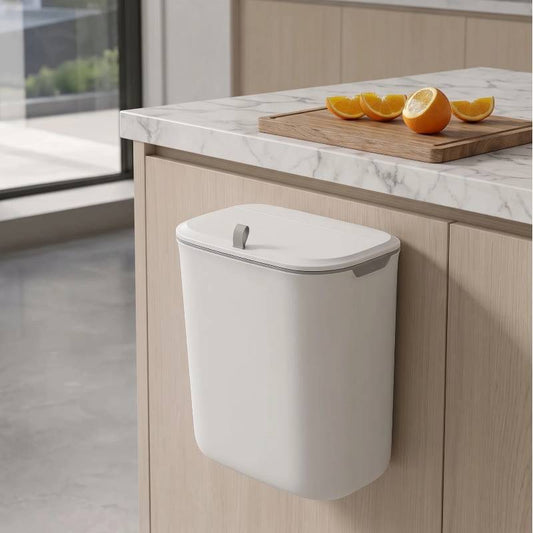
Which is the Best Type of Waste Bin to Use in a Kitchen and Why It’s Automatic Bins
Think about the last time you prepared a big family dinner. You’ve just finished seasoning a mountain of raw chicken drumsticks, your hands are completely covered in sticky marinade, and you need to throw away the plastic packaging.
What happens next?
If you are like most people, you end up doing a frantic, single-legged balancing act to hit a stubborn foot pedal. Or worse, you try to use a clean elbow to nudge open a grimy lid, immediately transferring raw chicken juices onto the outside of the bin.
Honestly, it is an absolute nightmare.
The humble kitchen bin is easily the most used appliance in the entire house, yet it is usually the last thing we think about when renovating or upgrading. We spend thousands on sleek induction cooktops and French-door fridges, but we leave a cheap, dented plastic bucket sitting in the corner to collect our waste.
Let me explain why your choice of kitchen bin actually matters, how the traditional models stack up against modern technology, and why making the switch to an automatic motion sensor bin from Luma or Hygio will completely change the rhythm of your home.
The Lineup: What are your actual options?
When you walk into a home goods store or browse online, the sheer variety of waste bins can make your head spin. However, when you strip away the flashy branding, kitchen bins generally fall into four main camps.
To help clear the air, let's break down how the traditional choices handle the daily chaos of a busy family home.
|
Bin Type |
The Good |
The Bad |
|
The Traditional Pedal Bin |
Reliable, mechanical, doesn't need power. |
Pedals snap, rods bend, and the base loves to slide across the floor. |
|
The Push-Top / Touch Bin |
Flat lids look neat and blend into cabinetry. |
You must touch it with dirty hands every single time. |
|
The Pull-Out Cupboard Bin |
Completely hidden away from sight. |
Awkward to use while cooking; leaks can ruin your expensive timber cabinets. |
|
The Automatic Sensor Bin |
Completely touchless, highly hygienic, smooth operation. |
Requires power (though newer models solve this beautifully). |
You know what? For decades, the stainless steel pedal bin was the gold standard. We all tolerated the loud clang of the lid because it was better than using our hands. But mechanical things eventually break.
The long metal rods hidden underneath pedal bins take a massive beating every time you step on them. Eventually, a tiny plastic clip snaps, and suddenly you are left with a premium metal cylinder that refuses to open without manual intervention.
Why Touchless Technology Just Makes Sense
If you are secretly clinging to the idea that a high-tech bin is a bit of a gimmick, let’s look at how we actually live in our kitchens. Hygiene isn’t just a buzzword; it’s about avoiding cross-contamination during the chaotic dinner rush.
This is where the automatic motion sensor bin completely distances itself from the competition.
Brands like EKO, Luma and Hygio have pioneered low-latency infrared sensors that sit neatly on the rim of the lid. When you approach with a handful of vegetable scraps, the sensor detects the change in light or reflection within a split second. A whisper-quiet micro-motor engages, lifting the lid smoothly before you even have a chance to hover directly over it.
Here’s the thing that trips people up: they worry that a sensor bin is going to constantly pop open every time the cat walks past or someone walks near the island bench.
Thankfully, sensor technology has evolved massively. Modern smart bins use targeted, angled detection zones. They ignore side-to-side ambient movement and only trigger when a hand or a plate moves deliberately over the top plane of the unit. It is intuitive engineering that handles real-life kitchen traffic without throwing constant tantrums.
Features that change the game (and what to skip)
If you have decided to cut your losses with your old slamming pedal bin, don’t just buy the first automatic model you see on sale. To get a piece of gear that truly elevates your kitchen, you need to pay attention to the underlying specifications.
The Power Solution: Look for Rechargeable Systems
Older generations of sensor bins were notorious for burning through expensive alkaline batteries. You would buy a clunky unit, stuff it with four massive D-cell batteries, and within three months, the lid would start sluggishly half-opening.
The best modern sensor bins including the Luma and Hygio model utilize integrated lithium-ion battery packs that charge via a standard USB cable. These setups deliver steady, uncompromised voltage right until the cell is flat. You simply plug the lid into a charger overnight once every six months, and you are good to go. No more hoarding disposable batteries in the junk drawer.
Dual-Compartment Waste Sorting
With local councils across Australia clamping down on recycling and green-waste sorting, a single-bucket bin just doesn't cut it anymore.
You could opt for a dual-compartment sensor bin. These designs split the internal space—typically offering a 30-litre section for general rubbish and a 20-litre section for your plastics and tins. Having both sorting options available under a single touchless lid streamlines your clean-up workflow instantly.
True Odour Defenses
Let’s be completely honest: our summer heat can turn a kitchen bin into a biological hazard within 24 hours. Prawn shells, old meat trays, and fruit peels do not mix well with a warm room.
Premium motion sensor models solve this by building a dedicated charcoal or carbon filter compartment directly into the underside of the lid. Because the lid spends 99% of its life tightly sealed by the motorized gears, the filter traps volatile odour molecules before they can escape into your living space.
Making the final call
Your kitchen bin is easily the most interacted-with object in your household. You use it while making your morning coffee, clearing the kids' lunchboxes, preparing dinner, and tidying up before bed.
If your current setup involves a sticky push-top lid, a broken pedal, or a hidden cupboard drawer that you have to constantly wipe down with disinfectant, it is time to upgrade to the Luma or Hygio Automatic Sensor Bins.
Investing in a high-quality, automatic motion sensor bin isn't about showing off a piece of futuristic tech to your guests. It is about removing those tiny, daily friction points that make cooking feel like a chore. Once you experience the effortless luxury of a lid that opens silently on command while your hands are full, you will look back at your old pedal bin and wonder how you ever survived the chaos without it.